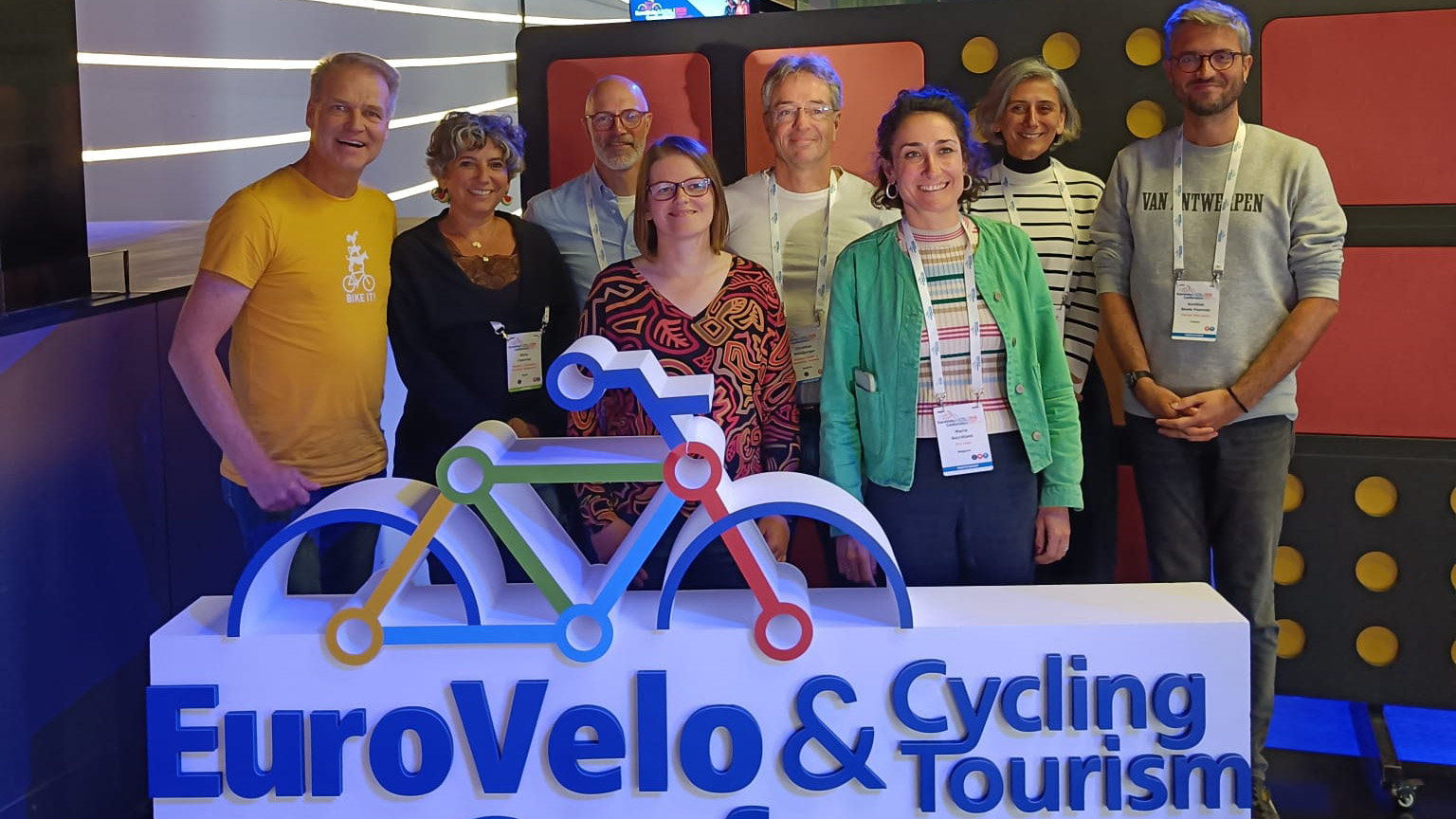
Bikenomist at the EuroVelo & Cycling Tourism Conference 2026
5 Oct 2026
EuroVelo turns 30: a network worth billions, yet still no law to protect it. That was the message Bikenomist brought to the 2026 EuroVelo & Cycling Tourism Conference in Utrecht, held from 30 September to 2 October under the theme "At the beating heart of cycling". More than 220 delegates from 37 countries and 67 speakers met to take stock of Europe's cycle route network.
Bikenomist took the stage twice. CEO Paolo Pinzuti presented what cycle tourists really want, with data from the Cycle Tourism Index 2026 developed with komoot. Director Pinar Pinzuti presented the governance of the Ciclovia dei Parchi della Calabria as a success story at European level.
Without a law, cycling bounces from one office to another
EuroVelo counts 17 routes across 38 countries, about 93,000 km once complete, 64% of which are already ready to ride. It is the largest cycle route network in the world and drives an economy worth billions. Yet its development still depends too often on the goodwill of whoever is in power.
In Utrecht, national coordinators were blunt about it. In Austria, budget cuts have hit cycling because it is not a government priority. In Bosnia, every new administration resets the work. In Finland, the national coordination centre closed when the EU project funding it came to an end.
Where there is a political commitment written into the rules, the network grows. In Switzerland, 73% of voters approved giving cycling a place in the federal constitution in 2018, and today every canton is required to have a cycling strategy. The point is simple: without a law, tourism, mobility and environment departments pass cycling from one office to the next. Politicians come and go, technicians stay, and the rules need to outlast a term of office.
Money is part of the same story. According to the European Commission, the EU invested €4.5 billion in cycling in the 2021–2027 budget period, €3.2 billion of it from EU funds, and ECF is now asking for €6 billion for 2028–2034. UNECE even pointed to EuroVelo as the basis for a future international convention on cycle routes. The ambition is there: what is missing is the legal framework that makes it last.
Where cycle tourists go: the Cycle Tourism Index 2026
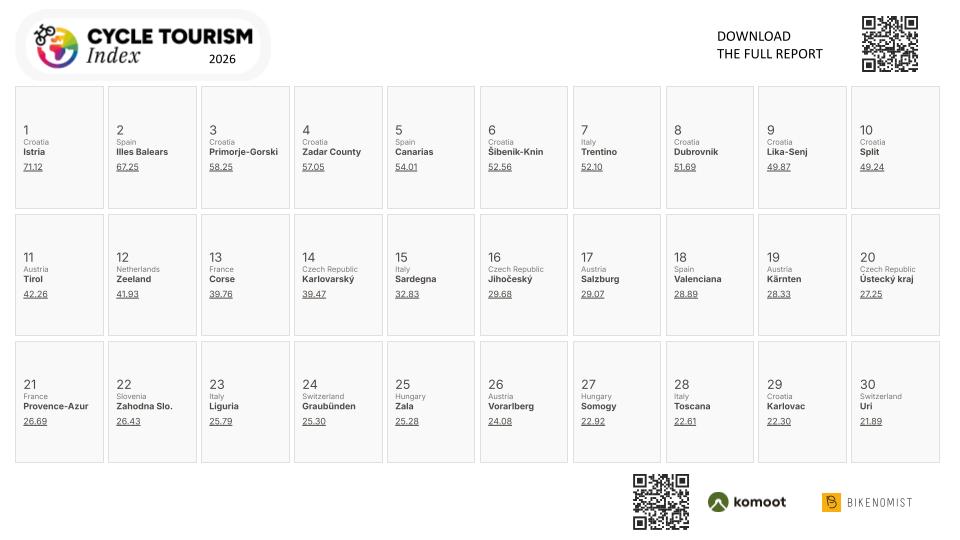
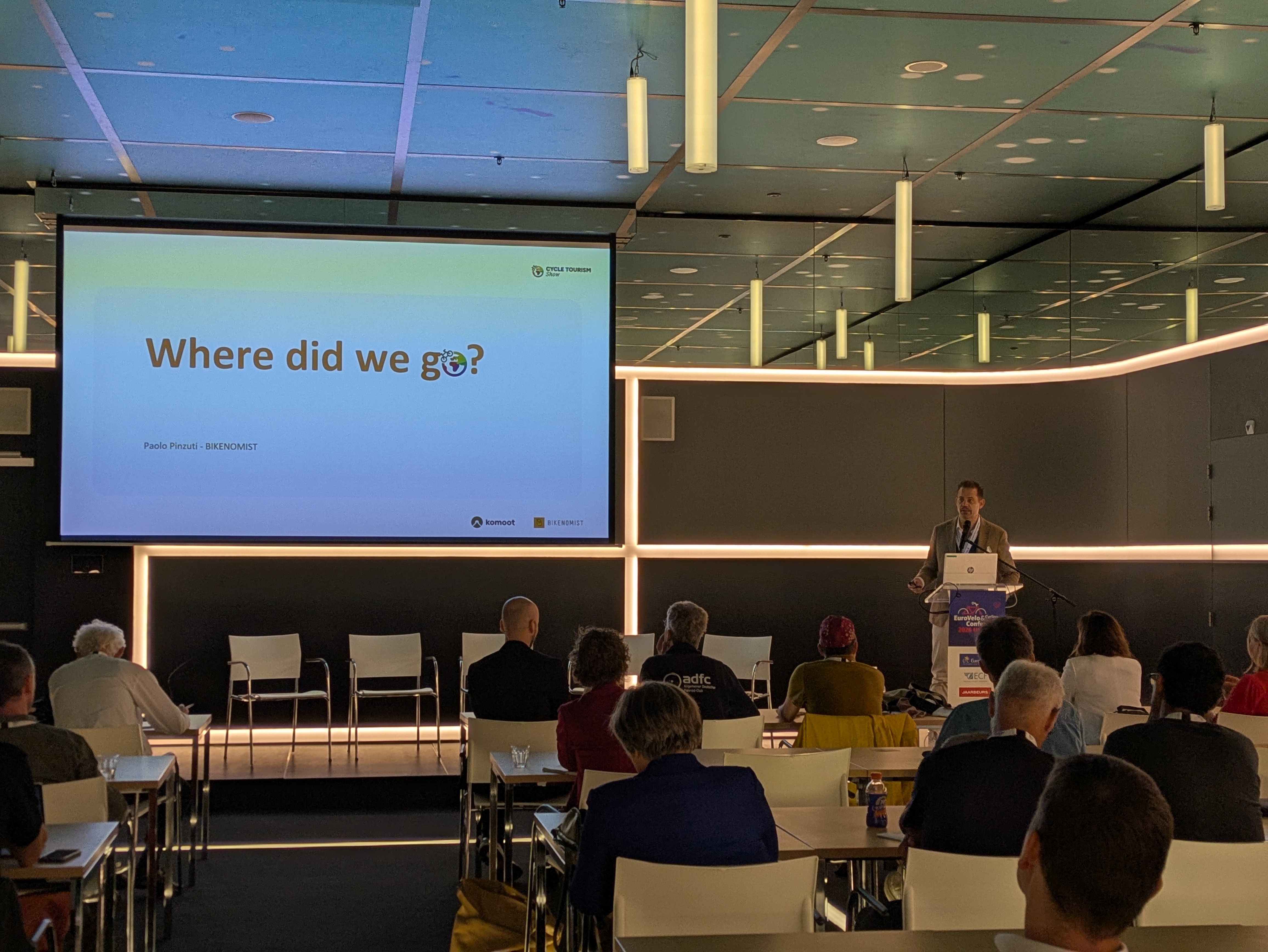
In his talk "Where did we go?", Bikenomist CEO Paolo Pinzuti presented the Cycle Tourism Index 2026, developed by Bikenomist with komoot. The index measures where cycle tourists actually went in 2025 across 14 European countries, based on usage data from the platform.
Paolo Pinzuti, CEO BikenomistCroatia dominates the overall ranking, with 7 regions in the top 10 and Istria in first place (71.12 points), ahead of the Balearic Islands (67.25). The top Italian region is Trentino in 7th place, followed by Sardinia (15th), Liguria (23rd) and Tuscany (28th).
The index also has four seasonal rankings: King of Winter, Queen of Spring, King of Summer and Queen of Autumn. The Canary Islands win in winter, while Trentino-Alto Adige is the only Italian region in the spring, summer and autumn top tens. The message is clear: destinations that invest in the shoulder seasons win cycle tourists that the summer coast does not bring.
Paolo was also open about the index's limits: it over-represents riders from Germany, Austria and Switzerland, favours border regions, requires digital skills and does not measure infrastructure quality. It is not perfect, but it matters. It tells riders where to go, professionals where to invest, politicians which path to follow and advocates where the economic leverage lies.
The Ciclovia dei Parchi della Calabria, a model for Europe
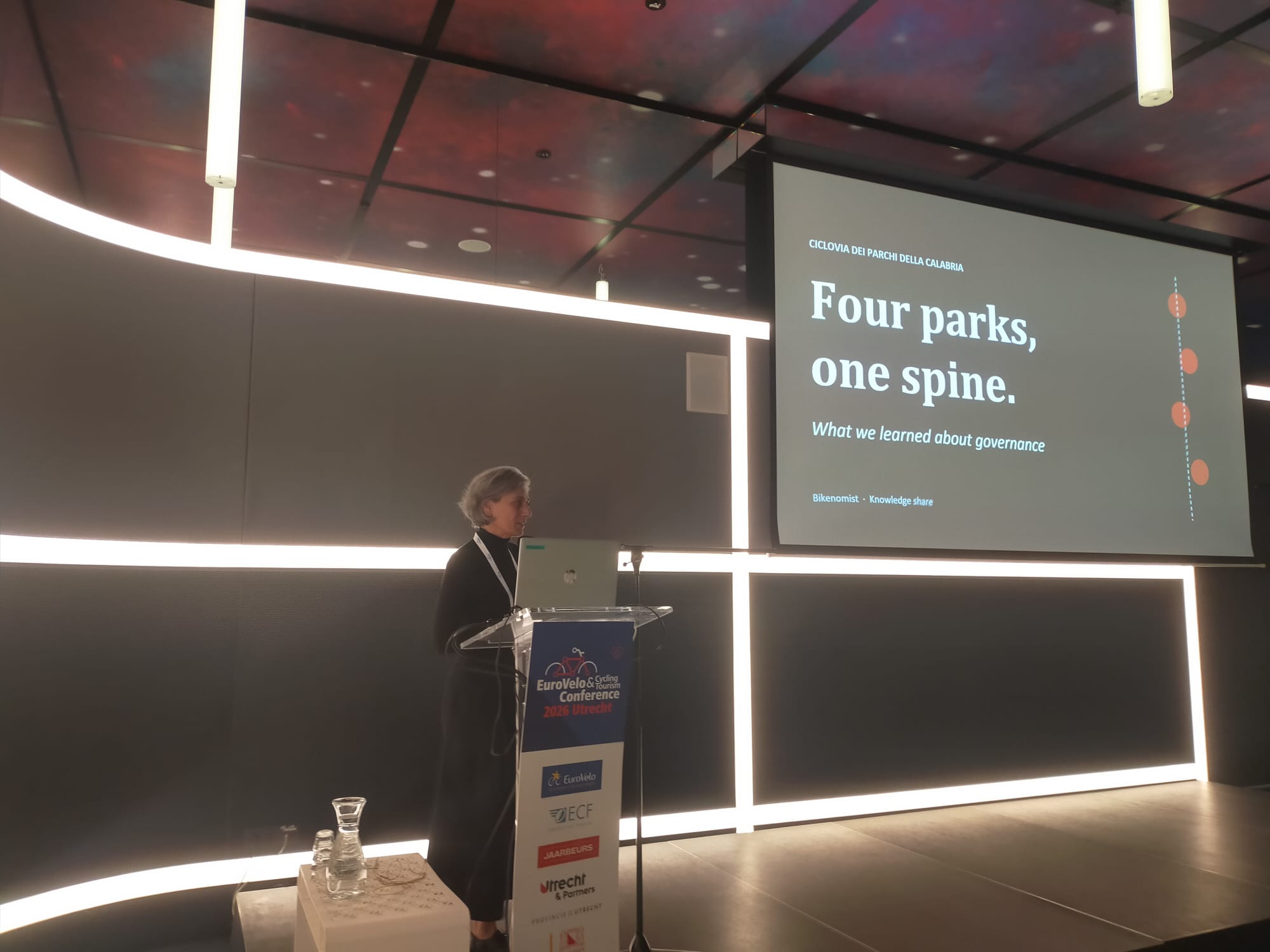
The law that many European countries lack, Calabria already has. That was the starting point for Pinar Pinzuti, Director of Bikenomist, who presented the governance of the Ciclovia dei Parchi della Calabria as a European success story.
The route runs 545 km from Laino Borgo to Reggio Calabria in 12 stages, crossing the Pollino, Sila, Serre and Aspromonte parks, more than 60 towns and villages and 350,000 hectares of protected land. It was conceived in 2019 by the Region's Department of Environment, not Tourism: the goal was ecological connection and territorial equity, and tourism was the tool. Almost no new asphalt was laid. The money went into signage, safety on low-traffic roads, existing tracks, water points and bike centres.
Four choices made the difference:
Few, capable owners. The €21.4 million of EU regional funds (ERDF 2014–2020) went to four park authorities instead of more than 60 municipalities: fewer tables, faster decisions, less parochialism. Each park also manages the stretch linking it to the next, so there are no orphan kilometres.
A regional law. Regional Law 48/2023 recognises the Ciclovia by law, and a regulation and register followed in 2024. Projects end, laws stay.
A market, not just a road. A €4 million call funded services for cyclists: beds, rental, repair and logistics. Around 200 operators signed the service charter and 45 new businesses were born along the route.
Let others tell the story. Cyclists, writers and creators rode the route and told it in their own words: its route collections on komoot have passed 3 million views.
The results show. Between 2021 and 2025 the number of cycle tourists counted rose from 36,541 to 60,098 (+64%), and international riders more than tripled, growing from 5% to 10% of the total. Since June 2024 the Ciclovia has been part of EuroVelo 7, the Sun Route from the North Cape to Malta, and it brings cyclists to Calabria in spring, autumn and even winter, when the coast is empty.
In July 2026 the operators along the route founded their own association. As Pinar put it: a top-down approach built the Ciclovia, now the people who live along it must keep it alive.
The two talks share one conclusion: cycle tourism grows where data shows the way and rules make the investment last. Bikenomist will keep both conversations going at the Cycle Tourism Show, 19–21 March 2027 at Padova, where destinations, operators, buyers and cycle tourists meet, and the Cycle Tourism Index will be discussed with the regions that want to climb it.
The EuroVelo conference is coming to Italy too: the 2027 edition will be held in Trieste from 29 September to 1 October, hosted by the Friuli Venezia Giulia region.
Tell us about your project, we'll get back to you shortly.
This form is powered by HubSpot and only loads its scripts once you accept marketing cookies.
This site uses cookies
We use technical cookies necessary for the website to work. Only with your consent, we also use statistics cookies (Google Analytics) and marketing cookies (HubSpot contact form, newsletter sign-up). Closing this banner with the × keeps only the technical cookies. You can accept, reject or customise your choice at any time from the "Cookie preferences" link at the bottom of the page. More information in our Cookie Policy and Privacy Policy.