
It was March, in Padua. The trade day of the Cycle Tourism Show had wrapped up after hours of one-to-one meetings between buyers and suppliers, and the networking dinner was the moment when conversations stop being appointments and turn into real exchanges. At my table sat Edoardo Bausani, experience designer at Butterfield & Robinson for the Italian Lakes, the Veneto, the Cinque Terre and Portofino.
Butterfield & Robinson invented the luxury bike holiday in 1966 and turns sixty this year. Its clients are mostly North American, and what it decides to put into an itinerary is worth a great deal to hotels, restaurants, wineries and entire destinations. † In bikenomics terms, a tour operator like this sits at a key point of the value chain: a single line in its programme can turn into repeat bookings from high-spending guests, season after season.
Edoardo Bausani, a Tuscan, has been designing these trips since 2012. Between courses I put my questions to him, and he answered with rare generosity: "These are little trade secrets you rarely share, but for the occasion we'll make an exception."
"In 14 years, e-bikes went from one guest in ten to 70%"
First, I asked him what has changed, from where he stands, in the way guests experience a bike trip. Edoardo has worked with a mostly American clientele since 2012, and he has seen two big shifts. The first shows up at the table. "Today they arrive far better prepared: they know the products, they recognise quality and they have higher expectations of food and wine. That forces us to be ever more careful in choosing restaurants, wineries and food experiences."
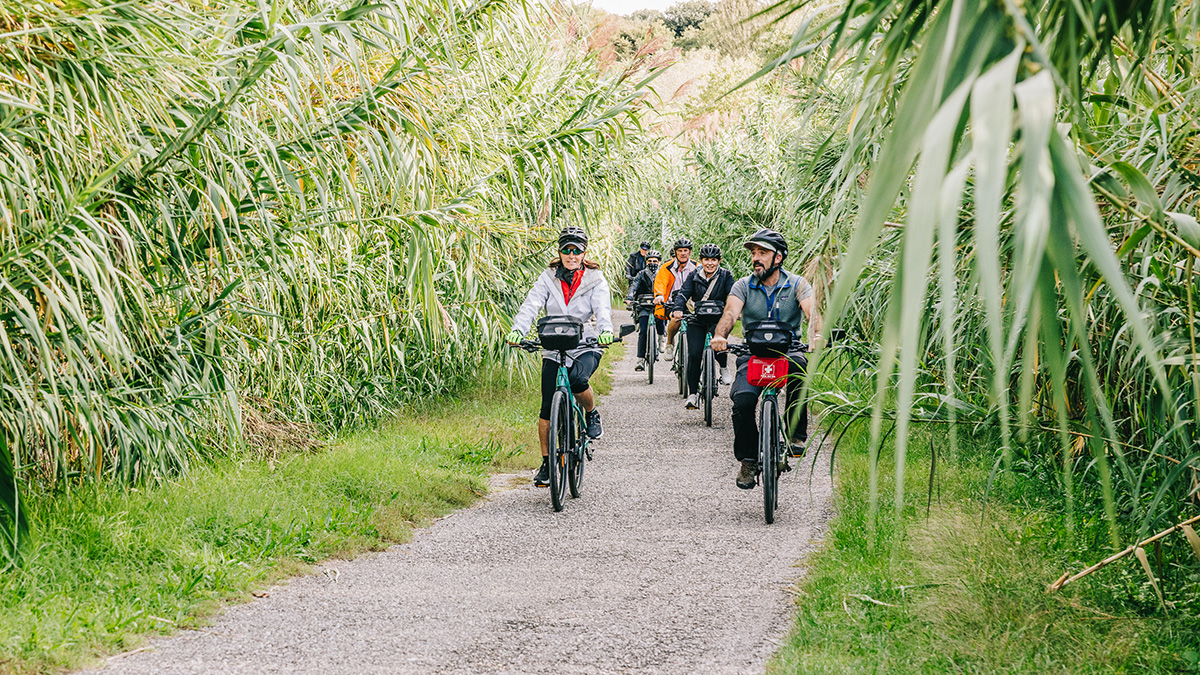
The second is the e-bike. "In 2012 it was a niche choice, about one guest in ten. Today it's the preference of around 70% of our guests. It has opened up the bike trip to a much wider audience, without taking away the pleasure of riding."
"At the Lakes they look for beauty, in the Veneto come the explorers"
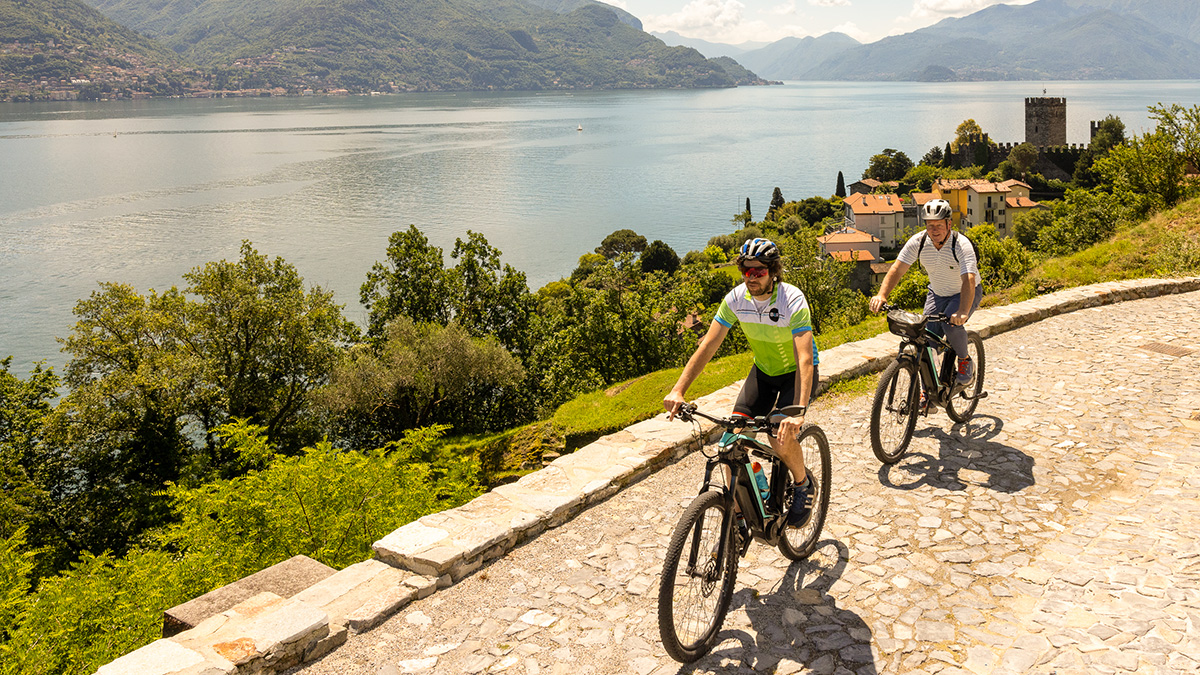
I wanted to know who their typical traveller is today, and whether they see younger guests or multi-generational families. Edoardo explained that the profile varies a lot between the two destinations, with one thing in common: "the curiosity to discover a place authentically, without giving up comfort and quality." At the Lakes, the guest "is looking above all for beauty, in an almost Stendhalian sense: landscapes that move you, historic villas, gardens, villages, an Italian way of life."
In the Veneto, by contrast, "we often find true explorers. People who sign up for a trip without knowing exactly where Valdobbiadene or Bassano del Grappa are, and who set off with genuine curiosity precisely because of that. Taking them to places they would never have chosen on their own, and seeing those places become the best memories of the trip, is one of the strongest motivations in our work."
Venice by oar, Garda from the Valtènesi, Como "yes, but not too much"
Como, Garda and Venice are among the most crowded destinations in Italy. When I asked how you design an itinerary that avoids the crowds, that was when the line about trade secrets came. And then the secrets themselves, one per destination.
In Venice, most guests have already been, so the challenge is to offer something else. "One of the experiences I love most is a lesson in voga veneta, Venetian-style rowing, on a traditional four-oar boat similar to a gondola, in the quiet canals of Cannaregio. Or a ride on Sant'Erasmo, Venice's vegetable garden, which shows a completely different side of the lagoon."
On Lake Garda the choice was clear-cut. "For the kind of cycling experience we want to offer, the eastern shore has problems with traffic. We found our balance in the Valtènesi and around Salò, quieter areas with a strong focus on quality tourism."
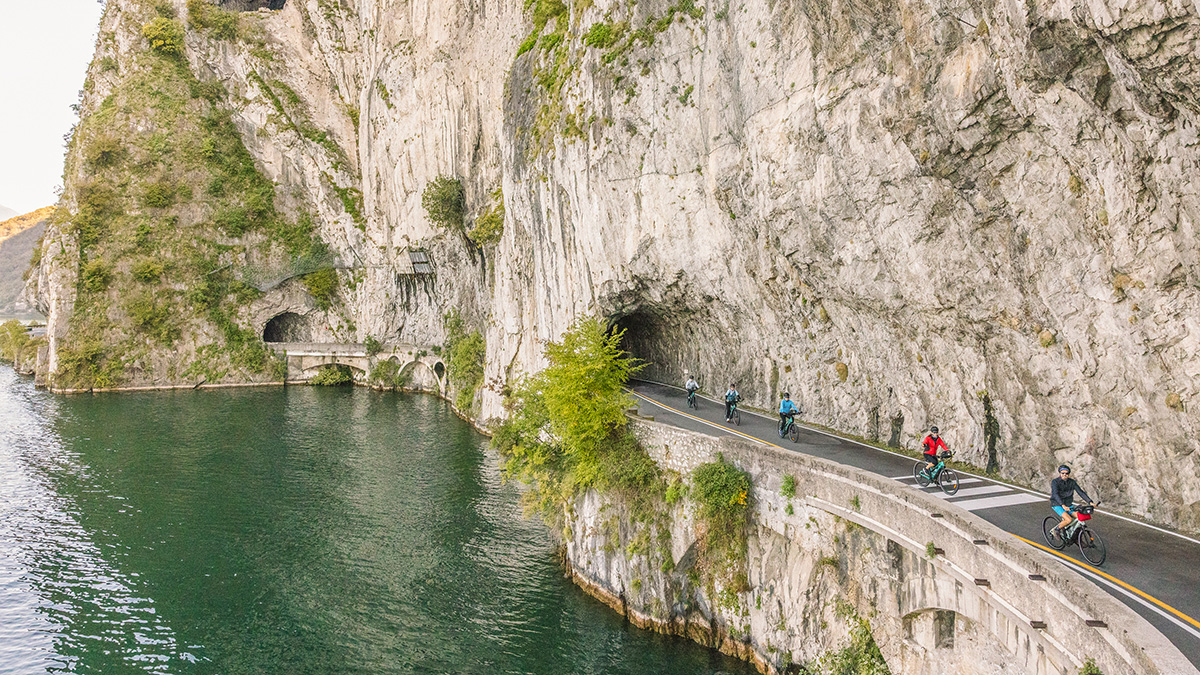
With Como, it's a matter of dosage. "It's essential for anyone who wants to know the great lakes, so we can't give it up. The secret is not to overdo it: Como yes, but not too much. Often the best feedback comes when guests, back home, tell me that Lake Orta was the most beautiful place they've ever seen, or that the rides on Lake Iseo are among their strongest memories of the trip."
Cycling the Veneto is "Tuscany thirty years ago"
Edoardo started programming tours in the Veneto in 2024. I asked him what he discovered while building trips in the Prosecco Hills, and what makes the area appealing to a North American guest compared with Tuscany. He fell for the Marca Trevigiana straight away, he told me, "and for its people: it's a place where pride in tradition and people's involvement make every experience feel natural."
The discoveries have precise names. Osteria al Castelletto, known to everyone as "Dalla Clemi", which Edoardo calls "an extraordinary stronghold of Treviso cooking". And the team at Loving Veneto: "Serena opens the doors to special places for us, where we organise food and music experiences that would be hard to replicate anywhere else."
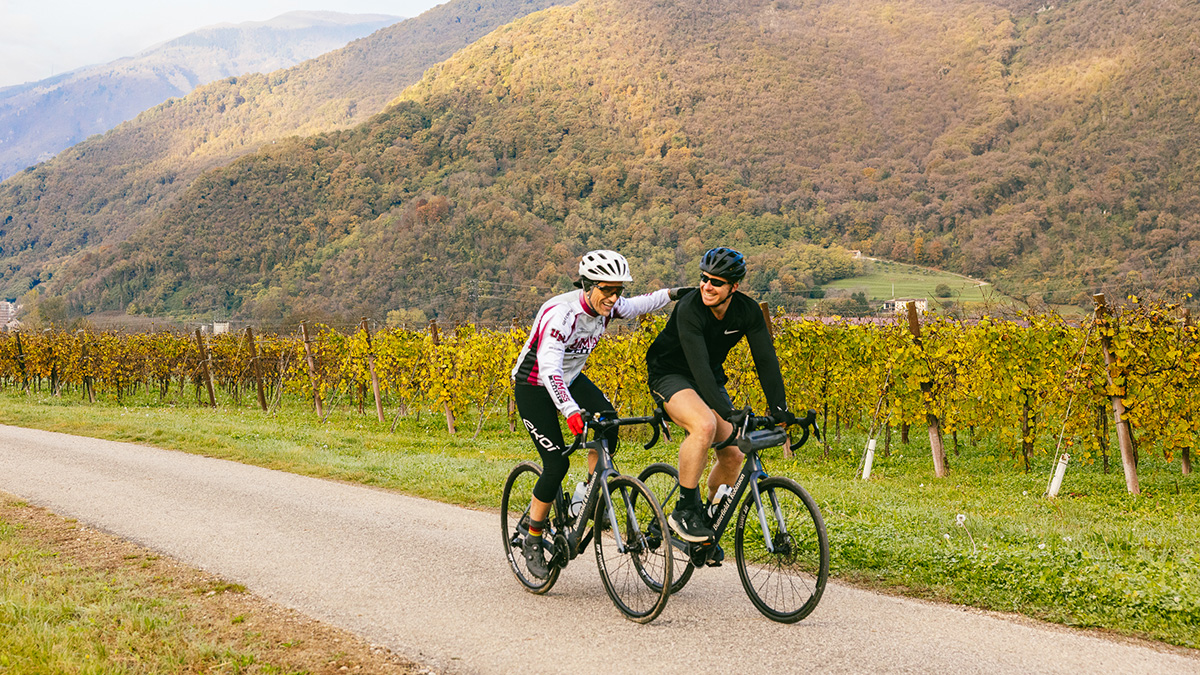
Then there's the riding, "simply formidable": roads through the vineyards, small villages, hills rolling one after another up to the Colli Asolani and Monte Grappa, with scenic climbs and quiet back roads.
He makes the comparison with Tuscany as a Tuscan. "The Marca Trevigiana, the Prosecco Hills and the Colli Asolani are a bit like Tuscany thirty years ago: authentic, genuine, rooted in their traditions, with an understated elegance. To North American guests, the Veneto offers a less familiar Italy, away from the established circuits, but just as rich in beauty, culture and food. Here more than anywhere I've learned that human relationships are what make the difference. In the age of galloping AI, it's good to see that people are the most valuable element of a high-end trip."
What advice would you give to those who want to work with international cycle tourism tour operators?
"Luxury and quality matter, but on their own they're not enough: what makes the difference is relationships and unique experiences. Be reliable, be flexible, and learn to see the experience through the eyes of the guest and of the tour operator. A business can be extraordinary on its own, but it has to fit into a multi-day trip, respecting its pace, logistics and expectations. The key is to collaborate, listen and adapt an experience without losing its authenticity. That's how a good offer becomes a product, and how a commercial partnership becomes a lasting relationship."
Italy is the most requested destination: now it's time to learn from the best
Today Italy is the country most requested by the clients of cycle tourism tour operators, according to the State of the Cycling Tour Operators Industry survey by ECF, ATTA and CycleSummit. We have a territory full of products and services to offer. But what travellers ask for is changing: they arrive better prepared, they look for authenticity, and thanks to the e-bike, cycling has become a way to discover a place that is open to almost everyone.
In this scenario, working with those who have more experience is not only about growing revenue. It's about learning from the best and improving your own offer. A hotel that joins a major tour operator's trip learns what a North American guest expects. A winery learns to keep pace with a multi-day itinerary.
And no artificial intelligence, however fast, can replace the people who design a route, choose the suppliers and build relationships of trust on the ground. It's a trade made of people. And sooner or later, people have to meet.
That is why around 300 tour operators from 25 countries will come to the next Cycle Tourism Show, in Padua from 19 to 21 March 2027, to meet, discover new territories and build partnerships. That's where I met Edoardo. The next meeting could be yours.
Pinar Pinzuti
Director, Cycle Tourism Show | Bikenomist